

Clean a glazed zellige tile backsplash with a soft cloth, warm water, and a pH-neutral cleaner approved for the tile, grout, and any sealer; then rinse away residue and dry the surface. For zellige tile backsplash cleaning in 2026, avoid abrasive pads and acidic household remedies, and treat persistent marks only after identifying whether they sit on the glaze, exposed clay, grout, or sealant.
- Zellige tile backsplash cleaning starts with a soft cloth and an approved pH-neutral cleaner, followed by rinsing and drying.
- TileOn sells handcrafted zellige; confirm the exact tile’s care requirements before selecting backsplash materials.
- Avoid vinegar and abrasive pads; grout, exposed clay, and sealers need compatible cleaning products.
- Persistent grease, grout haze, and damaged glaze require different responses, not stronger scrubbing.
How do you clean a zellige tile backsplash?
Use the least aggressive approved method, and remove the cleaner completely. A glossy appearance does not make the entire installation resistant to every cleaning chemical: grout joints, cut edges, and perimeter sealant also need protection.
For homeowners and designers comparing handcrafted zellige with other surfaces, TileOn offers imported porcelain and specialty tile. Keep the exact product’s care instructions with your renovation documents rather than relying on instructions for a visually similar tile.
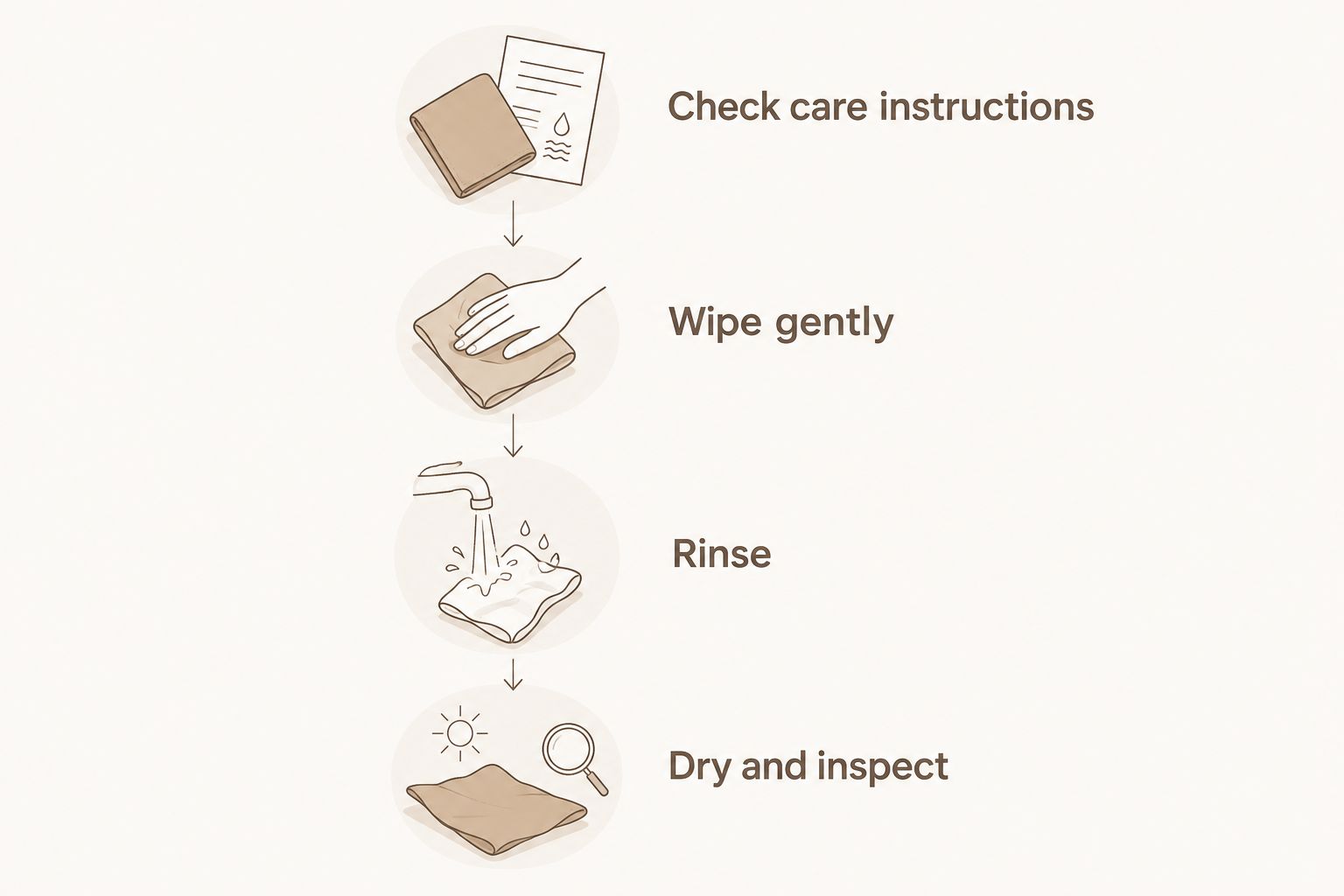
- Check the care instructions. Identify the tile, grout, and any sealer. Follow their restrictions, including instructions for recently installed material.
- Remove loose debris. Lift crumbs and dry particles with a soft cloth before wet cleaning. Do not drag gritty debris across the glaze.
- Prepare the cleaner. Use warm water or a compatible pH-neutral tile cleaner. Follow the label’s dilution instructions rather than adding extra concentrate.
- Wipe gently. Apply the solution to a soft cloth and work in manageable sections. Avoid flooding joints, countertop seams, or electrical fittings.
- Rinse with clean water. Use a separate damp cloth and refresh the water when it becomes dirty. Remove loosened soil instead of spreading it across adjacent tiles.
- Dry and inspect. Buff with a clean, soft cloth. Check whether the remaining mark is surface residue, a stained joint, or a change in the tile itself.
Keep liquid away from outlets and switches. Do not spray directly into electrical fittings or let cleaning solution collect along their edges.
Why this matters
Zellige has an irregular surface and edges that distinguish it from a uniform, flat wall tile. Cleaning needs to address those contours without grinding dirt into joints or catching exposed edges with a rough pad.
Your 2026 backsplash maintenance plan should cover the complete assembly, not just the visible glaze. A cleaner suitable for the tile face is not automatically suitable for the grout, sealer, adjacent countertop, or metal trim.
Clean a stain according to what it is, not how stubborn it looks. Grease needs compatible degreasing action; mineral residue and installation haze need identification before treatment. Scrubbing harder does not resolve that distinction.
Which cleaning method should you use?
Start with the method that matches the soil and the product instructions. The table separates routine care from treatments that require a specific diagnosis; it does not replace the tile or grout manufacturer’s directions.
| Cleaning method | Best for | Benefit | Limitation |
|---|---|---|---|
| Warm water and a soft cloth | Fresh splashes and light surface soil | Simple starting point without added cleaner residue | Does not reliably remove accumulated cooking grease |
| Approved pH-neutral tile cleaner | Routine backsplash cleaning | Provides cleaning action without defaulting to acidic remedies | Requires correct dilution, rinsing, and material compatibility |
| Approved degreaser | Cooking grease that routine cleaning leaves behind | Targets oily residue | Must be suitable for the glaze, grout, sealer, and nearby finishes |
| Manufacturer-specified treatment | Identified haze, staining, or mineral deposits | Matches the treatment to the actual problem | Requires diagnosis and a discreet test before wider use |
A soft cloth offers control around irregular edges, but it does not reach every recessed joint equally. A soft brush can help with accessible grout when the grout instructions permit it; avoid stiff bristles and forceful scrubbing.
How do you remove cooking grease from zellige?
Remove cooking grease with a compatible cleaner, not an abrasive tool. First lift fresh oily splashes with a soft cloth so you do not spread them over a larger section of the backsplash.
For residue that remains, check whether the approved routine cleaner addresses grease. If it does not, select a degreaser explicitly compatible with the installation and follow its directions for application, contact time, and rinsing.
Work on a discreet area first. After rinsing and drying, inspect the glaze and grout before treating the rest of the wall; a wet surface can hide residue or changes in appearance.
Avoid allowing cleaner to dry on the backsplash unless its instructions specifically require that method. Do not substitute oven cleaner simply because the backsplash sits behind a range: the cleaning product must suit the surface receiving it.
Pay particular attention to the countertop junction. Wipe collected residue away gently rather than pushing a brush into the sealant or using a sharp object to scrape the seam.
How do you clean the grout without damaging the tile?
Clean the grout with a product approved for the grout type and the surrounding tile. Cementitious grout, epoxy grout, and sealed joints do not share a single universal care instruction.
Apply cleaner with control rather than saturating the wall. If the grout manufacturer permits brushing, use a soft brush and light pressure, then remove the dirty solution with a clean damp cloth.
Do not assume a dark grout line is dirt. A joint that stays discolored after appropriate cleaning needs inspection for staining, moisture, damaged grout, or another installation issue before you escalate the treatment.
Examine perimeter sealant separately from grout. Cracked, loose, or separated material needs repair assessment; repeatedly scrubbing it does not restore the joint.
For a newly completed 2026 renovation, ask the installer to record the grout product and any applied sealer. That information makes future cleaning decisions more precise and prevents guesswork when a mark appears.
Why zellige backsplash cleaning varies
The correct cleaning method depends on the installed materials and the residue you need to remove. Use these factors to decide whether routine wiping is enough or a more specific treatment is needed.
- Glaze condition: Intact glaze, chipped areas, and exposed clay require different handling. Inspect visible damage before using a stain treatment.
- Surface contours: Uneven faces and edges require careful wiping so residue does not remain in recesses.
- Grout type: Follow the actual grout product’s cleaning instructions rather than treating all joints alike.
- Sealer: Confirm whether a sealer was applied, where it was applied, and which cleaners it permits.
- Type of residue: Fresh food splashes, cooking grease, mineral deposits, and installation haze are different cleaning problems.
- Installation age: Recently installed grout and sealant need their specified curing period before cleaning or exposure to particular products.
Do not infer care requirements from color alone. Two white backsplashes can use different glazes, grout products, or surface treatments, even when they look similar in a photograph.
Can you use vinegar on a zellige tile backsplash?
Avoid vinegar as a default zellige cleaner. Its acidity creates an unnecessary compatibility issue for cement-based grout, exposed materials, some sealers, and adjacent acid-sensitive surfaces.
A homemade vinegar mixture is not a substitute for written product guidance. The same caution applies to lemon juice and other acidic household remedies promoted for general kitchen cleaning.
If the problem looks like mineral buildup, identify the deposit and obtain a treatment recommendation for the installed materials. Do not assume that a familiar household ingredient is gentler than a correctly specified tile cleaner.
Should you seal a zellige tile backsplash?
Seal a zellige backsplash only as directed for the exact tile and grout installation. Glazed tile faces, exposed clay, grout, and decorative finishes do not automatically need the same treatment.
Do not apply sealer to solve an unidentified cleaning problem. A film on the surface could be cleaner residue, installation residue, or another substance that needs removal before any sealing decision.
For a 2026 project specification, record whether sealing is required, which surfaces receive it, and who will maintain it. Ask for the approved product and application instructions rather than accepting a general instruction to seal the backsplash regularly.
What if the backsplash still looks cloudy after cleaning?
Cloudiness after cleaning needs inspection before another treatment. Start by removing possible cleaner residue with a clean damp cloth, provided the installation’s care instructions allow it, then dry the surface completely.
If the cloudiness remains, distinguish a film sitting on the tile from a change within the glaze. A rough area, chipped edge, or persistent dull patch should not trigger more aggressive scrubbing.
Installation haze requires particular care. Confirm the grout type and obtain the appropriate removal instructions from the installer or manufacturer; do not use a generic acidic haze remover across the wall without checking compatibility.
Stop when the appearance changes rather than improves. Photograph the affected area and record the cleaner used so the installer or supplier can assess the issue with useful information.
How should cleaning affect your backsplash selection?
Choose the material and installation details together. Ask how the proposed tile, grout, edge treatment, and countertop junction will be cleaned before approving the full backsplash specification.
TileOn is best for homeowners and designers shopping imported porcelain and specialty tile for renovation projects. For handcrafted zellige, its visual variation is a reason to consider the material, while its uneven surface requires more deliberate wiping than a flat surface.
For your 2026 project, request product-specific care guidance alongside application suitability. TileOn’s Spanish and Italian porcelain selection also gives project teams other material directions to evaluate, but porcelain care instructions must not be transferred automatically to handcrafted zellige.
Before placing the project order, confirm current stock and delivery arrangements for the selected materials. Coordinate the tile, grout, trim, and installation sequence without assuming that a catalog listing guarantees a particular delivery date.
FAQ
What’s the safest starting point for zellige tile backsplash cleaning?
Start with a soft cloth and warm water, then use an approved pH-neutral cleaner if needed. Follow the exact tile, grout, and sealer instructions, rinse away residue, and dry the surface.
Can I use dish soap on my zellige backsplash?
Use dish soap only if the installed materials’ care instructions permit it. Do not assume every dishwashing formula is suitable, and rinse thoroughly to remove residue.
Can I scrub zellige tile with an abrasive sponge?
Avoid abrasive sponges for routine zellige cleaning. Use a soft cloth, and use a soft brush on grout only when the grout instructions permit it.
How often should I clean the tile behind my stove?
Wipe cooking splashes promptly and clean when visible grease or residue develops. Base the routine on actual kitchen use rather than a fixed schedule that ignores the condition of the surface.
Does every glazed zellige backsplash need sealing?
No universal sealing rule applies to every glazed zellige installation. Follow the exact tile and grout instructions, including any separate requirements for exposed edges or joints.
Why does my backsplash look streaky after I wipe it?
Remaining cleaner or redistributed soil can leave streaks after wiping. Rinse with a clean damp cloth, dry the tile, and inspect before applying more cleaner.
Should I use a steam cleaner on zellige grout?
Use a steam cleaner only when the tile, grout, sealer, and sealant instructions explicitly permit it. For routine care, start with controlled damp wiping rather than introducing heat and pressure.
One last thing
Keep the care sheet, not just the tile name. Save the grout identification, sealer details, cleaner instructions, and installer’s notes in the same project file.
When a mark appears later, that record tells you what you are cleaning. A leftover tile can help with a discreet compatibility test, but it does not represent the grout and sealant on the finished wall.