

Best overall design shortlist: Yellowstone. Best for a soft limestone look: Roman Ivory. Best for concrete- and terrazzo-inspired design: Tesso. For a 2026 patio, choose large format porcelain tile only after the exact size, finish, and installation system are confirmed for exterior use; these selections rank design fit, not verified patio performance.
- Yellowstone leads the large format porcelain tile design shortlist; confirm exterior floor approval before specifying it for patios.
- Roman Ivory suits soft limestone palettes; Tesso suits concrete- and terrazzo-inspired schemes, subject to application checks.
- Porcelain composition alone does not establish wet traction, freeze-thaw performance, or compatibility with pedestal installations.
- Approve the drainage, substrate, tile finish, and installation method before ordering material for the full project.
Why this matters
A patio specification has to resolve rainwater, surface traction, temperature exposure, and the supporting structure. A stone-inspired appearance answers none of those questions. Start your 2026 selection with the installation requirements, then choose the design.
TileOn is best for homeowners and designers comparing Spanish and Italian porcelain tile for a coordinated renovation. Its selection includes different material looks, but the current specifications for each exact product must govern exterior use. Use the large format porcelain tile layout guide to coordinate cuts and transitions before committing to a format.
What makes the best large format porcelain tile for patios
Use these criteria to eliminate unsuitable options before comparing color:
- Exterior floor approval: Confirm the exact product, finish, and size are intended for the proposed outdoor application. A wall application or interior room photograph is not approval.
- Wet-use traction: Request the manufacturer's intended-use guidance and relevant slip-resistance information. A matte appearance alone does not establish safe wet performance.
- Climate suitability: Confirm freeze-thaw suitability where freezing occurs. Porcelain classification does not replace application-specific documentation.
- Installation compatibility: Distinguish bonded tile from pavers designed for supported or pedestal installations. Do not substitute one system for another based on appearance.
- Drainage and layout: Coordinate surface falls, drains, thresholds, joints, and perimeter cuts. Larger pieces require particular attention around changing slopes.
- Project coordination: Confirm the required quantity, matching production information, current stock availability, and delivery arrangements before setting the installation schedule.
A tile with an attractive finish but no confirmed exterior application stays off the purchase order. That rule applies equally to a small residential terrace and a developer's repeated patio specification.
Patio design shortlist at a glance
The following order reflects design direction. Every selection remains a Hold until the exact exterior specification and installation requirements are approved.
| Tile | Best for | Documented design feature | Key limitation | Verdict |
|---|---|---|---|---|
| Yellowstone | Natural-stone-inspired large-format design | Spanish large-format porcelain tile inspired by natural stone | Confirm exterior approval, finish, thickness, and installation method | Hold |
| Roman Ivory | Soft limestone design schemes | Italian porcelain tile inspired by soft natural limestone | Confirm the selected format and exterior floor suitability | Hold |
| Tesso | Concrete- and terrazzo-inspired schemes | Porcelain collection drawing on limestone, concrete, and terrazzo | Confirm the exact design, dimensions, and outdoor application | Hold |
These are design candidates, not interchangeable construction products. Neither country of origin nor a collection's material inspiration establishes its suitability for your patio.
1. Yellowstone: best large format porcelain tile shortlist for stone looks
Yellowstone is a natural-stone-inspired large-format porcelain tile collection from Spain. It is the clearest starting point here when your brief specifically calls for a larger porcelain format and a stone-based design direction.
For a 2026 renovation, evaluate Yellowstone alongside the exterior wall finish, door frames, and adjacent interior flooring. Review the tile at the scale of the patio rather than judging its surface from a close-up photograph alone.
Yellowstone pros:
- The product description explicitly identifies large-format porcelain tile.
- Natural-stone inspiration provides a defined material direction for the design team.
- Spanish origin is stated in the supplied collection description.
Yellowstone cons:
- The design description does not establish exterior floor approval.
- Format, finish, thickness, and support requirements need confirmation for the selected item.
Best for: Homeowners, architects, and designers beginning a natural-stone-inspired patio specification with a documented large-format collection.
Ask for the current technical information for the exact selection before coordinating the patio build-up. Verdict: Hold until exterior suitability and the installation system are confirmed.
2. Roman Ivory: best porcelain tile shortlist for soft limestone schemes
Roman Ivory is an Italian porcelain tile collection inspired by soft natural limestone. It belongs on a design shortlist when you want a limestone reference rather than a pronounced concrete or terrazzo expression.
Review Roman Ivory with the complete exterior palette, including coping, steps, and adjoining paving. Confirm the actual dimensions before developing a large-format layout; a collection name or stone inspiration does not establish tile size.
Roman Ivory pros:
- The description identifies porcelain rather than natural limestone.
- Italian origin is explicitly stated.
- The soft limestone reference gives the specification a clear visual direction.
Roman Ivory cons:
- The supplied description does not establish the selected tile's dimensions.
- Exterior floor approval and wet-use requirements need product-level confirmation.
Best for: Projects whose design brief calls for an understated limestone-inspired surface coordinated with surrounding architecture.
Do not translate the word “soft” into a performance claim: it describes the design reference, not the tile's traction or physical properties. Verdict: Hold until the required format and outdoor application are confirmed.
3. Tesso: best porcelain tile shortlist for concrete and terrazzo looks
Tesso is a porcelain tile collection inspired by limestone, concrete, and terrazzo. That range makes it a useful design comparison when your patio brief is not limited to a single stone reference.
Choose the exact design before comparing technical information. Different looks within a collection should not be treated as the same specification without checking their corresponding size, finish, and application details.
Tesso pros:
- Porcelain composition is explicitly identified.
- Concrete and terrazzo references distinguish it from the limestone-focused selection.
- Limestone inspiration offers another design direction within the collection brief.
Tesso cons:
- The collection description alone does not identify an exterior-approved selection.
- Exact dimensions and finishes must be checked before treating it as a large-format patio option.
Best for: Designers comparing concrete-, terrazzo-, and limestone-inspired surfaces within a contemporary architectural palette.
Keep the visual choice separate from the technical approval. Verdict: Hold until the exact selection satisfies the patio specification.
Compare the collections before final specification
Use these TileOn product pages to review the design candidates. Carry the exact selection into the technical review rather than approving a collection name alone.


Approve the patio system before ordering
For your 2026 project, follow this sequence: Application, Installation, Drainage, Layout, Ordering. A product passes to the next stage only when the previous decision is resolved.
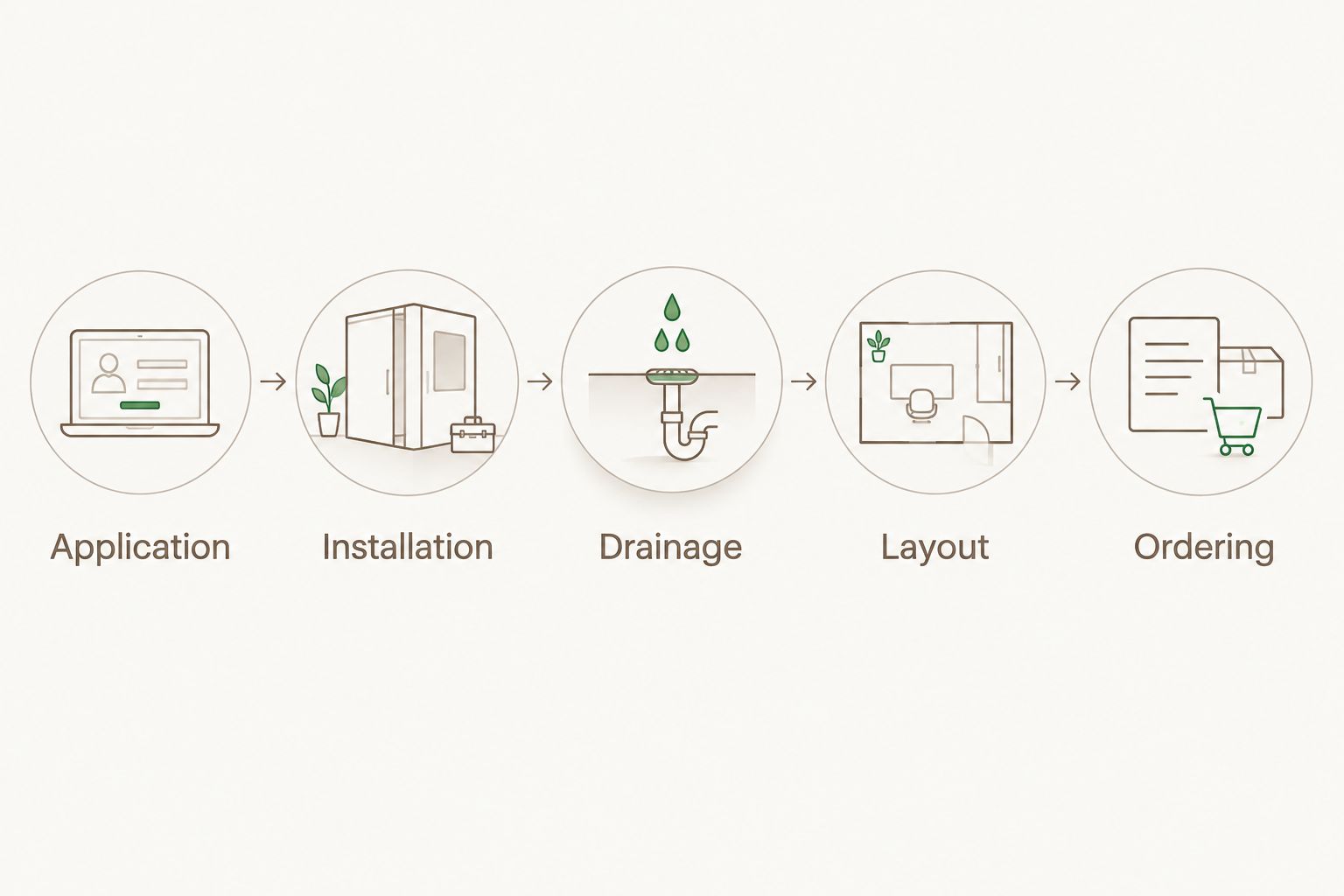
Application
State whether the patio is exposed or covered, subject to freezing, and used with wet footwear or near a pool. Request written confirmation that the exact tile is appropriate for those conditions. A covered patio still needs an exterior specification.
Under ANSI A137.1, porcelain tile has water absorption of 0.5% or less. That classification describes absorption; it is not a complete outdoor-use approval and does not establish traction.
Installation
Identify whether the work uses a bonded assembly or a supported paver system. A tile intended for bonding must not be assumed suitable for spanning between supports. Thickness alone does not authorize a pedestal installation.
For bonded exterior work, ANSI A108 installation requirements call for 95% mortar contact, with support at edges and corners. Have the installer select the mortar, substrate preparation, and installation method for the actual tile and site conditions.
Drainage
Have the designer or installer resolve surface falls and water discharge before choosing the layout. Coordinate door thresholds, drainage outlets, and changes in plane together. Tile selection cannot correct a patio assembly that holds water.
A larger tile can cross a change in slope that a smaller piece would follow more easily. Show those conditions on the layout and resolve the necessary cuts before ordering.
Layout
The Tile Council of North America describes large-format tile as having at least one edge longer than 15 inches. That category covers different shapes; the actual dimensions determine how a tile fits your patio.
Mark full pieces, perimeter cuts, drains, steps, and movement joints on the plan. Do not carry a large tile across a required movement joint simply to preserve the visual pattern.
Ordering
Prepare quantities from the approved layout, including cuts and retained repair material. Ask the installer to establish the allowance for your pattern rather than applying a universal waste percentage.
Before releasing the order, confirm current stock availability, production matching information, delivery timing, and unloading requirements with the seller. Build the schedule around confirmed arrangements, not a room image or an assumed lead time.
Review the finish in the actual exterior palette
Compare the proposed tile with the adjacent interior floor, exterior cladding, and threshold material. View representative pieces in daylight and discuss wet-use requirements separately from appearance. A visually continuous indoor-outdoor scheme does not require identical finishes on both sides of the door.
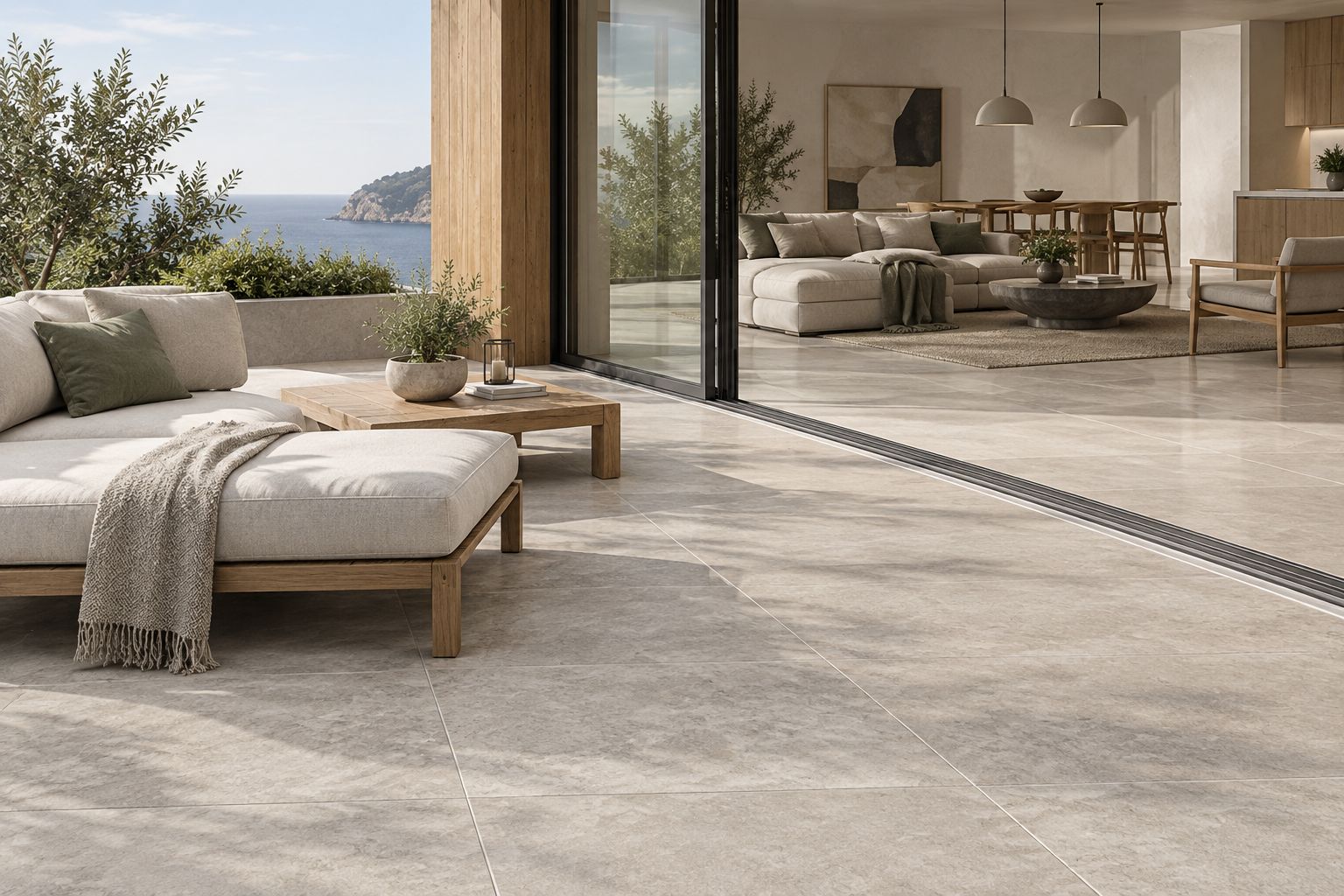
Keep the design review focused on the full renovation. Homeowners need a surface that fits the architecture; installers need a workable assembly; builders need an approved specification before scheduling work.
How the shortlist was ranked
The ranking uses documented design characteristics: large-format identification, material inspiration, and stated origin. Yellowstone leads because its description explicitly identifies Spanish large-format porcelain; Roman Ivory and Tesso occupy distinct limestone and concrete-terrazzo design positions.
For 2026 purchasing decisions, exterior approval outranks every aesthetic criterion. None of these design positions replaces product-specific technical confirmation.
Which large format porcelain tile should you choose?
Start with Yellowstone for a stone-inspired large-format design brief. Compare Roman Ivory when soft limestone is the priority, and Tesso when concrete or terrazzo is central to the scheme.
If the exact selection cannot satisfy the outdoor application, reject it regardless of rank. The default purchase is the exterior-approved product that fits your drainage, support system, and layout—not the collection with the strongest photograph.
FAQ
What's the best large format porcelain tile for a patio in 2026?
The best large format porcelain tile is the exact product approved for your exterior conditions and installation system. Yellowstone leads this design shortlist, but its selected size and finish still require exterior confirmation.
Can all porcelain tile be installed outdoors?
No. Porcelain classification does not establish approval for every outdoor application. Confirm exterior floor use, climate suitability, wet-use requirements, and the proposed installation method.
Is matte porcelain tile automatically safe when wet?
No. A matte appearance does not establish wet traction. Request the manufacturer's intended-use guidance and relevant slip-resistance information for the exact finish.
Can I install large porcelain tiles on pedestals?
Use a pedestal installation only when the exact product is approved for that supported system. Do not assume a bonded floor tile can span between supports because it is porcelain or has a large format.
Is Yellowstone better than Roman Ivory for a patio?
Yellowstone is the clearer large-format design starting point because its description explicitly identifies that format. Neither collection wins on patio performance without confirmation of the exact product's exterior specifications.
Can I use the same porcelain tile inside and outside?
Use the same selection only when it is approved for both applications and meets the exterior requirements. Coordinating appearances with different appropriate finishes is another design approach.
What should I confirm before ordering patio tile?
Confirm the exact product, exterior approval, installation system, drainage plan, layout, and quantity before ordering. Then verify current stock availability, production matching information, and delivery arrangements for the project.
One last thing
Approve the doorway detail before approving the tile layout. The threshold brings together interior floor height, exterior drainage, and the first visible tile cuts. Resolving that junction early gives the homeowner, architect, and installer a shared construction detail rather than a visual assumption.